
Clean Energy Topic: Human Impacts
-

NOVA’s Car of the Future Research Project
Student teams research and develop a proposal to decrease the carbon footprint of their city’s public transportation system through the use of various new technologies and/or alternative fuels. Students prepare a report that explains why their transportation plan is the best one for their community.
-
Inside an EV
In this short lesson from Power Smart for Schools, students will learn how electric cars work a short video then teachers can use the provided Parts of an EV instructional presentation to guide students through a handout where they learn more about electric vehicles with a handout and answer key provided.
-

Power Outages and Energy System
Students learn how burning fossil fuels contributes to climate change, leading to more extreme weather and frequent outages. By exploring solutions, students see how communities can adapt, mitigate impacts, and build resilience, empowering them to think critically about energy and climate action.
-
REVIT’s Infrastructure Innovations: How Can We Enhance the Safety, Accessibility, and Sustainability of our Transit System?
In this REVIT unit, students will explore how to enhance their local transportation system by addressing the driving question, “How can we enhance the safety, accessibility, and sustainability of our transit systems?” with a design team to design an improvement to the transportation infrastructure of their city or town. Their final product will involve gathering…
-
REVIT’s Fueling the Future: What Energy Source Used by Cars is Best for the Environment
Students learn how burning fossil fuels contributes to climate change, leading to more extreme weather and frequent outages. By exploring solutions, students see how communities can adapt, mitigate impacts, and build resilience, empowering them to think critically about energy and climate action.
-
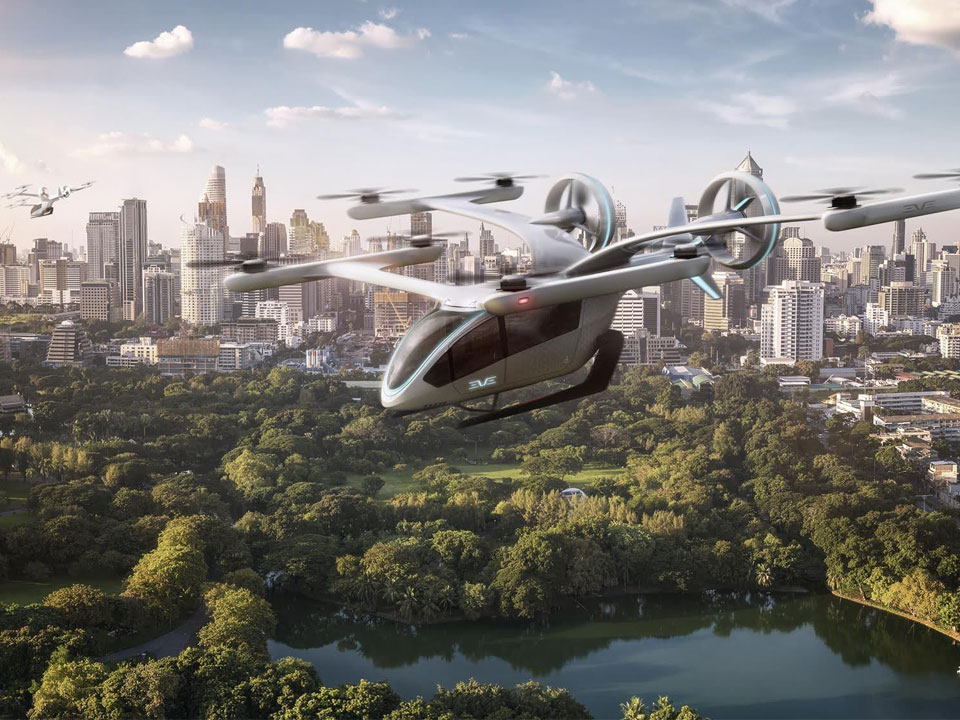
Clean Transportation Through Electric Aviation Vehicles Unit
In this unit, students will collaborate in groups to develop and present informed recommendations about the potential use of eVTOLs (Electric Vertical Takeoff and Landing Vehicles) to local government officials. Each group will conduct research comparing eVTOLs and Boeing’s PAV (Passenger Air Vehicle) to other modes of transportation, such as helicopters, airplanes, cars, and flying…
-
eVTOL Legislative Presentation
Students will collaborate in groups to develop and present informed recommendations about the potential use of eVTOLs (Electric Vertical Takeoff and Landing Vehicles) to local government officials. Students will communicate the benefits of adopting eVTOLs technology, as well as potential challenges or risks. Their final presentations will reflect an evidence-based perspective to guide decision-making at…
-
Researching eVTOLs
Students in groups will conduct research comparing eVTOLs (Electric Vertical Takeoff and Landing Vehicle) and Boeing’s PAV (Passenger Air Vehicle) to other modes of transportation, such as helicopters, airplanes, cars, and flying cars. Students will analyze the benefits of adopting eVTOLs technology, as well as potential challenges or risks.
-
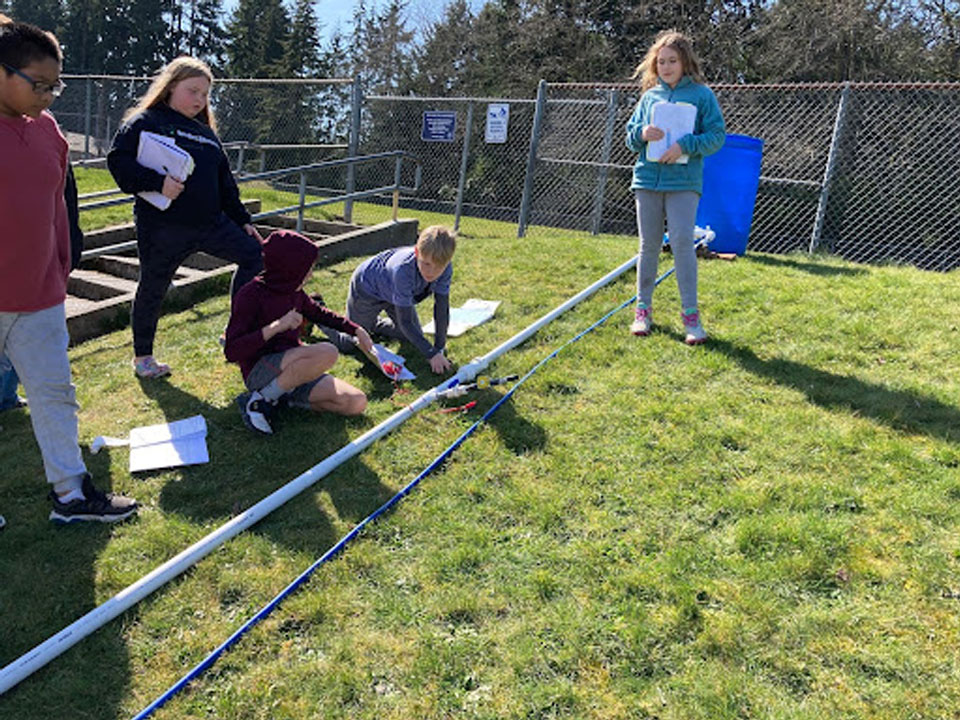
When and Why Do We Build Dams?
Students will demonstrate basic understanding of electricity generation and basic components of a hydroelectric dam. They will research, design and test turbines for hydroelectric generation. Students will research and defend(opinion stance) various people groups and social justice factors(tribal rights, salmon protection & energy access) connected with water storage, flood/irrigation support and electricity production/distribution.
-
Renewable City
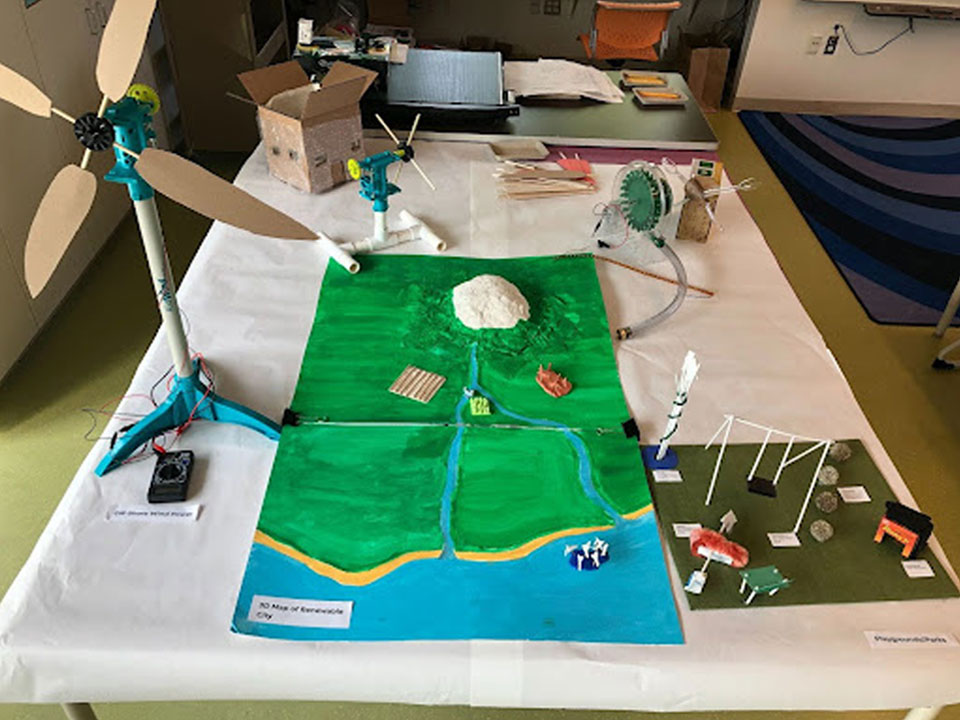
This Renewable City Unit aims to help students dive in and actively explore sustainability, renewable resources, and how they might personally help solve our climate change problem. As students use multiple methods for investigating, creating, and thinking about these critical issues, they will be encouraged to develop pliable minds and action-oriented skills to address climate…
-
Community Project
Students decide on a community project they’d like to do to personally help with climate change or energy justice.
-
Tragedy of the Commons
In this lesson, students will engage in a simple game in order to model and understand Tragedy of the Commons. During the game, students discuss their ideas about sustainability.
-
Hydropower Dams: Learning Through Stakeholder Research
Students will take on the perspective of different stakeholders that are involved in hydropower development. They will use their scientific understanding and the needs of that stakeholder to communicate varying positions on the development of new dams.
-
Socratic Circle and Climate Change Phenomena
Students analyze their own ideas about climate change and sustainability using a Socratic Circle discussion then investigate a phenomenon to further make sense of climate change. Students’ ideas help shape their understanding of climate challenges and give space for discussion around what an equitable, sustainable community looks like.
-
Designing a Renewable City Model
Students will use their collective understandings built throughout an entire unit of sustainability topics to develop their own sustainable city. This lesson uses a variety of visual and physical hands on tools for students to make their ideas and climate solutions come to life. Students will wrap up their development by presenting their “Renewable City”…
-
Idea Game Generator
Students will select a combination of geogrpahies and technologies to be tasked with developing “land art.” In this process, they will creatively plan the integration of these technologies into the land in a way that allows for environmental and societal benefits. This planning activity can be launched into a larger unit of engineering design or…
-

Methane to Music
Students explore the phenomena of a Ruben’s Tube powered by renewable gas to understand how humans impact the flow of carbon in earth’s atmosphere. The lessons include topics of decomposers in a food web, compost, municipal waste, the and the carbon cycle.
-
Carbon Cycling and Human Impact
Students create a visual model of the carbon cycle with notation of carbon sinks and movement. They use this model to predict changes in carbon movement based on human activities.