
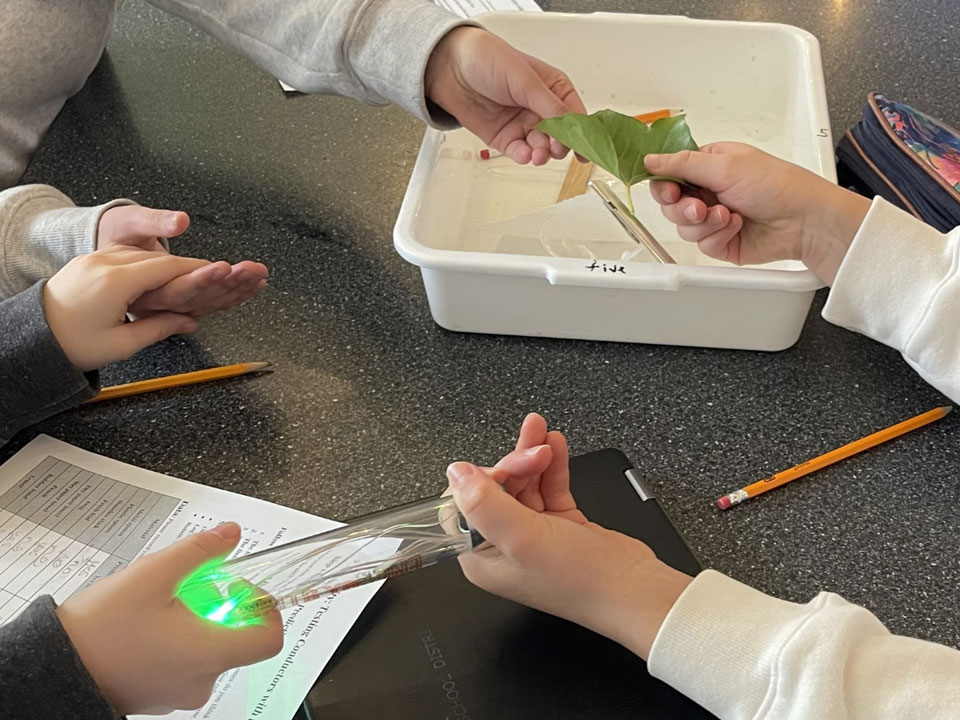
Phenomena: Electricity Can Travel Through Unexpected Conductors
Electricity can travel through unexpected conductors (like people, tree branches, water, and everyday objects), even when there are no sparks or visible signs.
Explore Branch on a Power Line Youtube video and ask students what they notice and what they wonder using Noticings and Wonderings Worksheet
This real-world phenomenon explains why:
- Downed power lines are dangerous even when they aren’t sparking
- Tree branches can carry electricity
- Water increases electrical danger
- Metal or graphite objects in outlets can complete a circuit
- Kites/drones contacting power lines can energize the string or device
- Utility boxes must not be touched
In NGSS terms, the lesson focuses on the phenomenon of electrical energy transfer through conductive pathways and the cause-and-effect relationship between material properties and safety outcomes.
Learning Goals:
- Students will investigate how electricity travels through different materials to determine which are conductors and which are insulators.
- Students will use data from hands-on investigations to explain real-world electrical hazards, such as downed power lines, tree branches, water, and electrical outlets.
- Students will model the flow of electrical energy through circuits and conductive materials to understand how completing a pathway allows electricity to move.
- Students will connect scientific concepts of energy transfer and conductivity to safe behaviors around electricity in everyday life.
- Students will develop cause-and-effect reasoning by predicting and explaining how electricity can travel through unexpected pathways.
Materials List
Handouts
- Noticings and Wonderings Notes Worksheet
- Scenario cards with safety situations
- Electricity, Conductors and Safety Investigations student worksheet
- Student worksheet answer key
- Electricity, Conductors and Safety Investigation Wordsearch
- Electricity, Conductors and Safety Investigation Exit Ticket
Group Supplies (3-5 per group)
- Steve Spangler energy stick
- Metal spoon
- Wood craft stick
- Rubber band
- Fresh leaf or small green twig
- Dry paper towel
- Wet paper towel
- Pencil (graphite)
- Eraser
- Chart paper or whiteboard
- Markers
- Neighborhood map
- (Optional) Chromebooks
Important Links
Next Generation Science Standards
Next Generation Science Standards
- MS-PS3-2: Develop a model to describe that when the arrangement of objects interacting at a distance changes, different amounts of potential energy are stored.
- MS-PS2-3: Ask questions about data to determine the factors that affect the strength of electric forces.